

Rabbit Damage Prevention for the Garden
- Michael Sewell

- 6 days ago
- 5 min read
A row of healthy lettuce can disappear almost overnight when rabbits find a way into the garden. Young beans, peas, tulips, herbs and newly planted shrubs are equally tempting. Effective rabbit damage prevention garden measures work best when they stop access early, rather than relying on a last-minute deterrent once plants have already been eaten.
For gardens across Reading, Berkshire, Slough and Buckinghamshire, the answer is usually a combination of physical proofing, sensible planting and regular checks. Rabbits are persistent, but they are not impossible to manage. The right approach protects the garden without creating unnecessary work or relying on short-lived fixes.
Recognise rabbit damage before choosing a remedy
Rabbits usually feed close to the ground, leaving clean, sharply angled cuts on stems and leaves. They may graze a lawn down in irregular patches, strip tender shoots from borders or nibble bark from young trees during colder weather. Small, round droppings, shallow scrapes in loose soil and runs beneath hedges are further signs that rabbits are using the garden regularly.
It is worth confirming the cause before spending money on proofing. Slugs tend to leave ragged holes and a slime trail. Deer damage is normally higher up a plant, while squirrels can dig up bulbs and disturb pots. Rabbits are particularly likely where there is open access from fields, railway verges, allotments, rough ground or neighbouring gardens with gaps under fences.
The scale of damage also matters. One rabbit visiting occasionally may be managed by protecting a few high-value plants. Repeated feeding, a burrow nearby or damage across several gardens points to a wider access issue that needs addressing at the boundary.
Rabbit damage prevention garden fencing that works
A properly fitted barrier is the most dependable form of rabbit prevention. Scent-based products and home remedies can sometimes discourage a brief visit, but rabbits often return once the smell fades or food is scarce. Physical exclusion removes the reward.
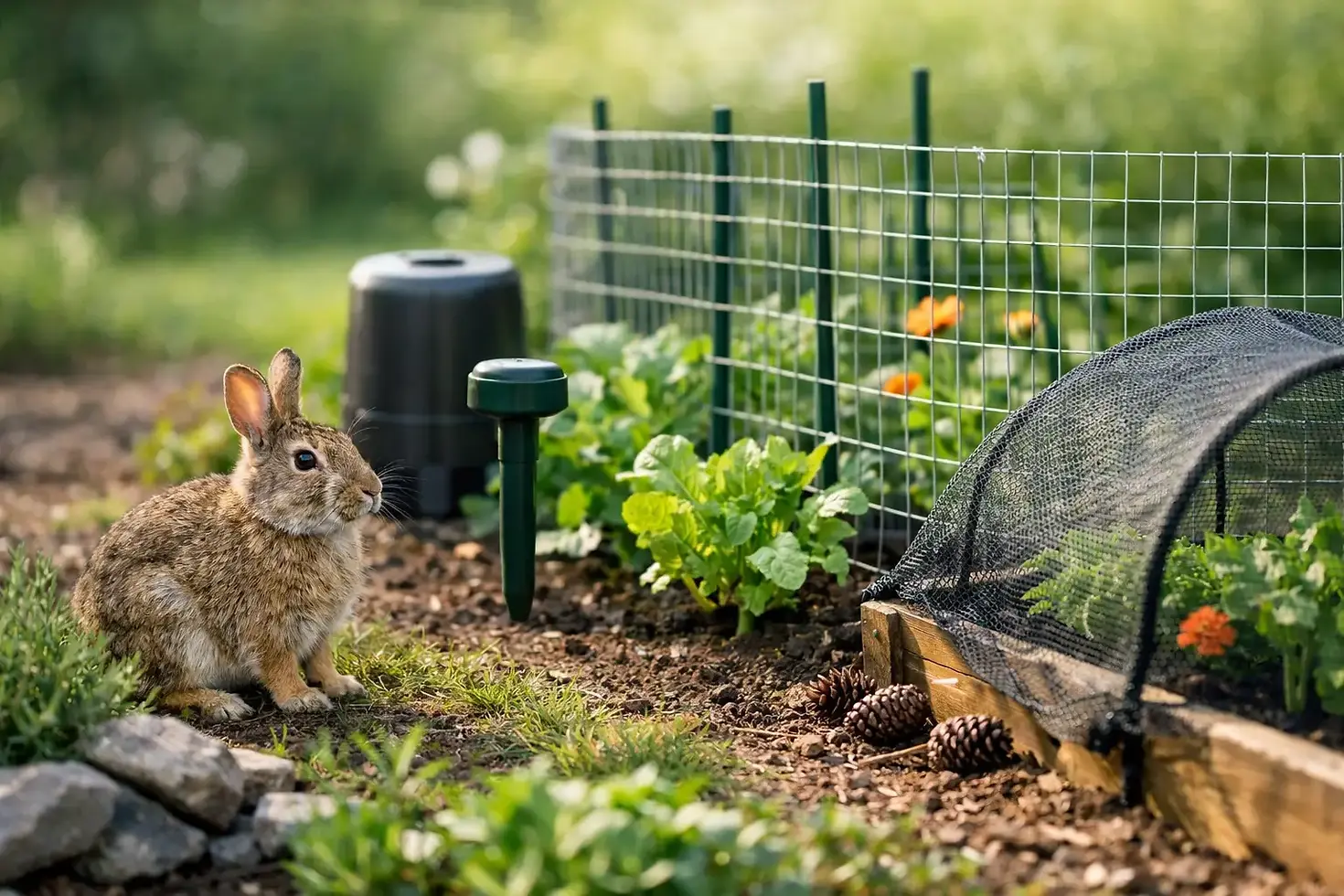
For a vegetable patch or vulnerable border, use galvanised wire mesh with openings no larger than around 25mm. A fence of about 90cm to 1m high is normally sufficient for rabbits, provided it is secure and there are no objects beside it that offer an easy route over. The lower edge is just as important as the height.
Bury the mesh 15cm to 30cm into the soil, or turn it outwards along the ground and pin it firmly in place. Rabbits can push and dig under loose fencing, particularly at established routes. Check corners, gates and joins carefully, as these are often where a neat-looking barrier fails in practice.
Existing timber panels can help, but only if there is no gap beneath them. A small opening is enough for a rabbit to enter. Add mesh along the base where necessary, and make sure gates close flush to the ground. If the whole garden cannot be fenced, prioritise the kitchen garden, new planting areas and any section where rabbits are causing the greatest loss.
Protect trees, shrubs and individual plants
Full perimeter fencing is not always practical, especially in an established ornamental garden. In that case, plant guards offer a cost-effective alternative. Place rigid mesh guards around young fruit trees and newly planted shrubs, leaving enough room for growth and airflow.
Protect the trunk from ground level to at least 60cm, or higher where snow, mulch or raised ground could reduce the effective height. Avoid tying material tightly against bark, as trapped moisture and rubbing can create a separate plant-health problem.
For lettuces, herbs and young vegetables, fine mesh cloches or raised beds with fitted covers can be effective. The cover must be secured at the edges. A loose net draped over plants may keep birds away but is rarely a reliable rabbit barrier.
Make the garden less inviting
Rabbits prefer a garden that gives them both food and cover. Dense, unmanaged edges beneath hedges, sheds, decking or compost areas can provide sheltered routes into feeding areas. You do not need to remove every bit of wildlife habitat, but keeping vulnerable beds clear around the edges makes it harder for rabbits to feed without disturbance.
Trim back excessive vegetation beside fences and inspect behind sheds, bins and stored materials. This also makes signs of activity easier to spot. If you find a suspected burrow, avoid simply filling it in immediately. An active burrow may be reopened, and the reason rabbits are entering the garden still needs to be resolved.
Plant selection can reduce losses, though no plant is completely rabbit-proof when food is limited. Rabbits often favour tender growth, so protect new plants while they establish even if the mature variety is not usually their first choice. Strongly aromatic plants such as lavender, rosemary and some alliums may be less appealing, but they should complement fencing rather than replace it.
Use repellents with realistic expectations
Commercial rabbit repellents may provide a temporary extra layer of protection around selected plants. Their effectiveness depends on weather, application frequency, the availability of other food and how accustomed local rabbits are to the garden. Rain, irrigation and new growth can all mean repeat treatment is needed.
Avoid relying on folklore remedies such as human hair, soap bars or strong household substances. They can be ineffective, unpleasant or unsuitable around edible crops, children and pets. Products should always be used exactly as directed and only where they are appropriate for the area being treated.
Ultrasonic devices are also variable. A small, enclosed garden may see some short-term benefit, but dense planting, walls and changing weather can limit coverage. Rabbits may become used to a fixed sound or light source. If you use a motion-activated device, treat it as support for proofing, not the main solution.
Keep on top of seasonal risks
Rabbit pressure often becomes obvious in spring, when fresh shoots appear, and in late autumn or winter, when alternative food is harder to find. This is the time to inspect guards, mesh and fence lines before damage starts.
After storms, gardening work or building repairs, walk the boundary and look for lifted mesh, new gaps and disturbed soil. Check low points where a fence meets uneven ground. A small repair made quickly is far easier than replacing a crop or several newly planted shrubs.
If you are planning a new garden, build prevention into the layout. Raised beds with protected access, clear borders around fences and correctly fitted gates give a much better result than trying to retrofit barriers after rabbits have established a routine.
When professional help is the sensible next step
Repeated rabbit activity can be difficult to resolve where gardens back onto open land, commercial grounds, shared boundaries or large unmanaged areas. Landlords and property managers may also need an approach that protects tenants' gardens without creating conflict over shared fences and responsibilities.
A professional assessment can identify how rabbits are entering, whether burrows or harbourage are present and which proofing measures will give the best value. This is especially useful where DIY fencing has failed, damage is extensive or other pests may be involved. Any control work should be humane, lawful and suited to the site, with prevention remaining the priority.
FULL GUARD Pest Control provides practical pest proofing and integrated pest management for homes, gardens and commercial properties across the local area. A qualified technician can help establish the cause of the problem and recommend a proportionate plan to stop it returning.
The most useful step is often the simplest: inspect the garden boundary this week, protect the plants you would most hate to lose, and deal with the smallest gap before it becomes a well-used rabbit run.


Comments